There is a Light that does not dim. To speak of it directly is to invite the pupil to widen against a sun—a blindness, not an understanding. Thus, the wise cast a shade. Not the shade of obscurity, but the shade of the great Tree, where one may sit and begin to see. What is uttered of this Light is not its description, for it has none we could hold with the hands of the mind. What is uttered is a vessel, a crystalline firmament shaped by reverence, through which its undying sparkle may be sensed.
They speak of Names. Not mere markers, but living essences descending into the constrained world, as souls into Egypt. Each name, a star. The collective, a constellation—a fixed pattern in the heavens of Eternity, telling an eternal story. The verse begins with names, for to know the story of the Light, one must first know the characters it illuminates.
They speak of the Firmament—Rakia. Not a barrier, but a luminous expanse, a secret stretched thin between the source and the seen. This firmament is not stone, but living crystal; not to block, but to transmit. Within its depthless blue are set the sun, the moon, the stars. All are held there. All gleam from it. This is the great mystery: the separating veil is itself the medium of the shine. The “brightness of the firmament” is this very paradox—the radiance of that which contains radiance.
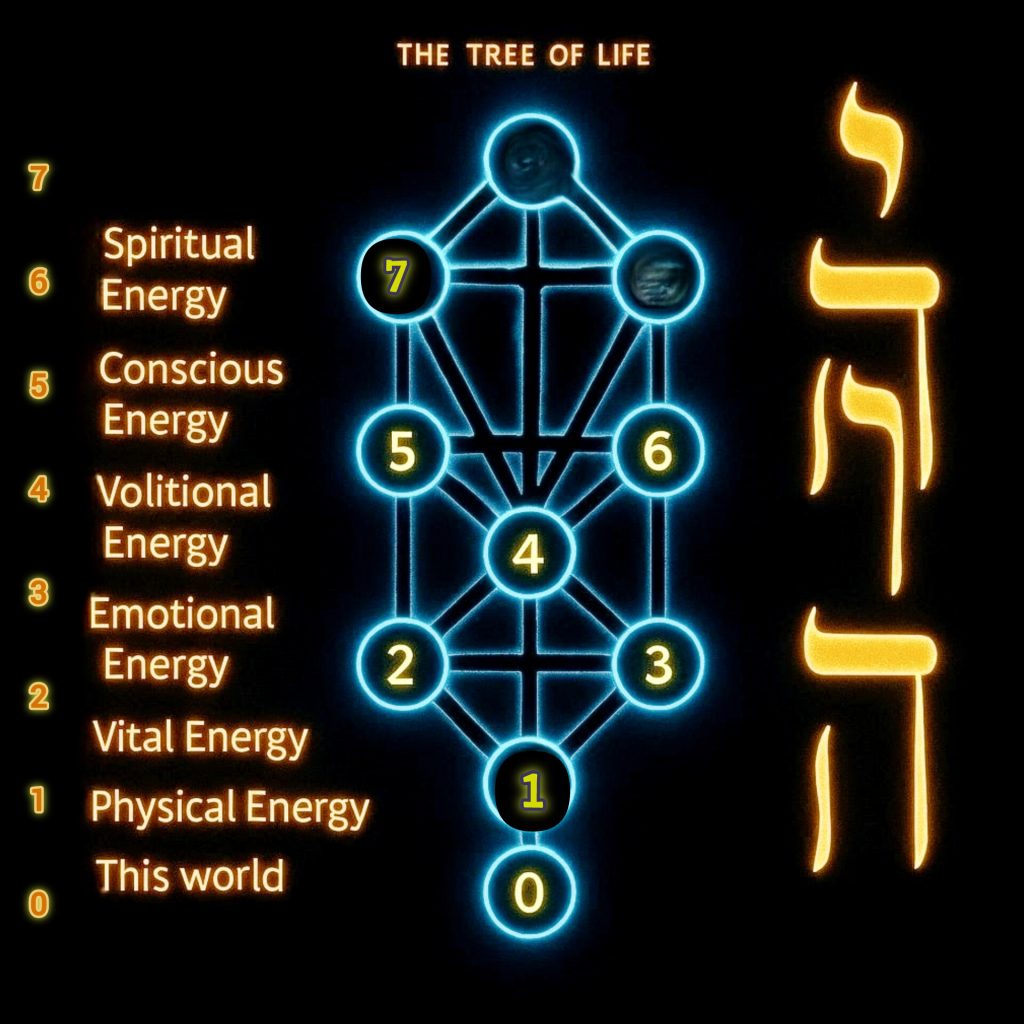
They speak of the Garden, and in its center, the Tree of Life. The Light of the Firmament falls here not as a scorching beam, but as a nourishing glow, a dew of brilliance. The Tree is not wood, but a flowing architecture of mercy and severity, of pillar and vine. Its branches are not for climbing, but for shelter—they canopy the garden. Beneath them, every creature finds its place: the roaming beasts of instinct and the singing birds of aspiration. The Light, filtered through the Firmament, structured by the Tree, becomes a specific blessing for each specific form. The spice, the blossom, the soul—each receives its portion from the one radiance.
They speak of the Fruit. This is the taste of the Light itself. It is not seen, but ingested. It becomes life. To “be wise” is to have turned one’s face so fully to this gleaming that one learns to eat it. It is sustenance that leaves no husk, a vitality that the shadow of death—the “Other Side”—cannot touch, for it belongs to an order of reality where waning is impossible. Those who taste it are called Maskilim, the enlightened ones. Their shine is not their own; it is a reflection caught and held, a star-glint on a still pool. They have life within life, world within world.
So what is this allegory? It is a map of emanation. From the Unspoken Source (Eden) flows a River of Radiance. It pools as the Firmament (the hidden law of the universe). It structures itself as the Tree (the cosmic axis, the sefirotic anatomy). It manifests as the Garden (the world of soul and creation). And it is consummated as the Fruit (the realized consciousness of the holy). To move from Name to Fruit is the journey of the soul from existence in potential, through the constriction of the world, back to the conscious, eternal partaking of the Light.
And the shade cast by this undimming Light? It is the world itself—a world of separation, of vessels, of branches and leaves. But it is a blessed shade, a protective and defining outline, without which the pure radiance would be unapproachable. We need the leaf-pattern on the ground to know the sun is above the tree.
Thus, the Zohar’s words are final. To add would be to paint on the crystal, obscuring the light. To take away would be to break the vessel, spilling what it carries. In its perfect, paradoxical imagery—the bright firmament, the sheltering Tree, the living Fruit—it says what can be said. The rest is not silence, but the direct, wordless, and everlasting Zohar: the Splendor.