
DISCLOSURE eyes _25
Executive Summary: The Unveiling of a Simple Truth: Catalyzing Global Awakening for Enduring Peace
This report investigates a transformative framework for global peace, positing that a “simple truth,” deeply rooted in Kabbalistic principles and actualized through the Transformational Leadership, Learning, and Change (T3) model, can serve as an interpretive event catalyst. This catalyst is envisioned to trigger a critical mass awakening, guiding humanity away from the destructive cycles of conflict, symbolized by World War III, towards a state of everlasting life. The proposed awakening fosters an evolved human and planetary society, fundamentally characterized by the rejection of concealment, shame, and contempt. This profound shift is anticipated to culminate in a delightful celebration of unity and peace, marking a new era for humanity.
Introduction: The Imperative for a New Paradigm of Peace
The contemporary global landscape is persistently marked by conflicts, divisions, and profound uncertainties, underscoring an urgent and undeniable need for a fundamentally new paradigm of peace. Traditional geopolitical and socio-economic approaches, while necessary, have often proven insufficient in addressing the deep-seated roots of human conflict. History unequivocally demonstrates that wars, far from offering sustainable solutions, invariably lead to long-term economic decline, pervasive social unrest, and widespread global instability. The pervasive nature of global conflict suggests that a mere cessation of hostilities, or a superficial approach to conflict resolution, is insufficient. Instead, a truly enduring peace necessitates a fundamental reorientation of the collective human consciousness. This transformation must address the very roots of division and conflict, which reside in patterns of human perception and self-identification. Such a profound shift indicates that the ultimate pathway to global harmony is not exclusively political or economic, but deeply spiritual and psychological. The historical trajectory of warfare, often driven by fragmented identities and competition for resources, underscores the need for an underlying change in how humanity perceives itself and its relationship to the broader world. This re-evaluation of fundamental assumptions is critical for transcending the cycles of violence that have historically proven unsustainable.
The core challenge lies in humanity’s ability to transcend the narrow, often self-imposed, boundaries of local community, national identity, religious affiliation, or cultural heritage, and instead embrace the overarching truth of a shared humanity. This profound shift necessitates a fundamental transformation in human consciousness and a concerted, unified collective action. The concept of a “critical mass” in this context refers to a qualitative shift in collective awareness, where the “wound of separateness” that plagues human consciousness begins to heal. When external efforts to achieve peace are undermined by underlying financial interests or a lack of fundamental change in human behavior , it becomes clear that the solution must address the internal drivers of conflict. The path to a new paradigm of peace, therefore, must originate from a shift in consciousness that moves beyond fragmented identities and self-serving motives towards a recognition of universal interconnectedness and interdependence. This implies that the cessation of conflict, and the emergence of an “evolved society,” is contingent upon a fundamental internal transformation of human beings themselves.
This report posits that a potent synthesis of ancient Kabbalistic wisdom and contemporary leadership theory offers the robust framework necessary for this unprecedented global transformation. Kabbalah, as a profound mystical branch of Judaism, provides a unique and illuminating perspective on existence, revealing spiritual paths that resonate deeply within the human soul. It emphasizes that the divine “light is also within us” and that humanity’s purpose is to become “vessels for this light”. Rav Michael Laitman, a leading contemporary Kabbalist, articulates a compelling vision that the wisdom of Kabbalah will, at a destined point, “burst into everyone’s awareness, offering a clear goal for the lives of each of us,” thereby enabling billions to actively participate in discovering the profound purpose of creation. Complementing this spiritual foundation, the Transformational Leadership, Learning, and Change (T3) model provides the practical and dynamic means to inspire, motivate, and effectively guide collective human potential towards higher, transcendent goals.
An “interpretive event catalyst” is conceptualized as a profound moment, or a series of interconnected moments, where a critical mass of individuals collectively grasps, internalizes, and begins to embody a fundamental, simple truth. This collective internalization leads to a radical shift in perception, behavior, and societal organization. It is akin to a “new spiritual awakening” that emerges within human culture, brought about by a “critical mass of individuals who experience their lives as a spiritual unfolding”. This catalyst is instrumental in moving humanity away from a purely materialistic worldview towards a new outlook that profoundly recognizes “spiritual design” and actively rewards the attitude of “helping others” and “making the world better”. The effectiveness of such a catalyst lies not merely in the event itself, but in how that event is interpreted and integrated into the collective consciousness, leading to a unified shift in perspective. The “simple truth” must be so inherently profound and universally applicable that its recognition overrides individual differences and aversions to closeness. The success of this catalyst is measured by its ability to foster a collective, unified consciousness that transcends the “wound of separateness”. This means the catalyst must be an experiential and intellectual revelation of the interconnectedness of all things, making conflict and division appear illogical and unsustainable.
Part I: The Kabbalistic “Simple Truth” – A Foundation for Everlasting Life
The Infinite Light (Ein Sof) and the Purpose of Creation
At the heart of Kabbalistic teachings lies the profound principle that all existence, all creation, emanates from a singular, ultimate source: the Infinite Light, known as Ein Sof. This Ein Sof is described as the “unknowable and boundless aspect of God that exists beyond all forms and distinctions,” representing the “ultimate ground of being from which all of creation emerges and to which it ultimately returns”. It is not a static entity but a dynamic, ever-unfolding creative power, the inexhaustible wellspring of divine energy that permeates and sustains the entire universe. The concept of Ein Sof as the singular source of all creation suggests that any perceived separation or fragmentation within existence is ultimately an illusion. This foundational understanding implies that true peace and harmony must stem from recognizing this inherent unity.
The foundational text of Kabbalah, the Zohar, articulates the primary reason for creation: “So that we may know Him”. This purpose is further elaborated by Rabbi Schneur Zalman, who explains that God desired to establish a “dwelling place in the lower worlds (Dirah BeTachtonim)”. This divine intention implies an active human role: to elevate the material world and connect it to the Divine. This is achieved through the performance of Mitzvot, which, beyond mere commandments, signify “connection”. When Mitzvot are performed with profound love and awe, the dwelling becomes illuminated with “G-dliness”. The notion that humanity’s purpose is to actively participate in revealing God’s presence in the physical world transforms the understanding of human existence from passive reception to active co-creation. The act of elevating the material world and connecting it to the Divine suggests that spiritual fulfillment is not found by escaping the physical, but by transforming it.
The process of creation itself, as described in the Zohar (Bereshit A: Verse 137), involved a “descent of the Endless Light FOR THE PURPOSE OF BEING SEEN.” Initially, this light manifested as a “thin, almost imperceptible light,” veiled and “concealed by a fragile imprint, as delicate as a needlepoint.” Crucially, “THUS, ALTHOUGH A TINY SLIT WAS OPENED, IT WAS INSUFFICIENT FOR THE LIGHT TO BE GRASPED.” This “concealed thought” remained unknown until an “illumination extended from it to the place on which the letters were imprinted,” from which “Everything emerges”. The initial “concealment” of the Light is not a flaw in creation, but a deliberate design for human agency. It implies that the Light must be earned through conscious effort and intention, rather than simply being given. This redefines peace and “everlasting life” not as external states to be achieved or received, but as emergent qualities of humanity fulfilling its divine purpose. World War III, in this context, represents the ultimate manifestation of “concealment” and “separateness”—the failure to grasp and embody this fundamental unity—which must be overcome by actively revealing the underlying interconnectedness.
The Concealed Light (Or HaGanuz) and the Path to Revelation
The “Concealed Light” (Or HaGanuz) is a pivotal concept in Kabbalah, described as a “great Light that was initially revealed” during the very act of creation. This Light is said to contain “all the answers, blessings, miracles, and healing that we could ever need, both individually, and collectively”. The Zohar, in Genesis section 348, explains that when the Creator uttered, “Let there be Light,” it referred to this Or HaGanuz. Through a profound connection to this Light, Adam, the first man, possessed the ability to perceive from the beginning of the world to its end, experiencing a state of “never a moment of doubt or uncertainty”. This same all-encompassing Light was also revealed by the Creator to the great souls throughout history. The existence of this concealed, all-encompassing Light implies that solutions to humanity’s deepest problems are not external or scarce, but inherent within creation, awaiting discovery.
However, the Creator determined that this universally beneficial Light could not simply be bestowed; it “has to be earned”. It shone for a period of 36 hours before being concealed, with the explicit purpose that humanity, both individually and collectively, would “work to regain it”. This is why the number 36 holds a secret connection to the Concealed Light, and the month of Kislev (whose numerical value is 36) is considered a vessel for connecting to this Light. The journey to harness this illumination demands “patience and dedication,” and is profoundly shaped by “intention (kavanah)” that is firmly grounded in love and compassion. The concealment of the Light signifies that humanity’s current state of pervasive conflict, suffering, and perceived lack (e.g., leading to World War III) is a direct consequence of this hiddenness. This suggests that the path to enduring peace and collective well-being is not through external imposition, but through a conscious, collective, and dedicated effort to “earn” and reveal this latent wisdom. This implies a process of profound self-discovery, collective spiritual labor, and ethical action rather than passive expectation of external intervention. If all solutions and healing are contained within this concealed light, then the current global state of “torment” and the specter of World War III are direct manifestations of humanity’s disconnection from, or failure to “earn,” this inherent wisdom. The concealment, therefore, is not a punishment, but a condition for human free will and active participation in creation. The “simple truth” is not merely the
existence of this Light, but the active, conscious process required to reveal it. This process of “earning” the Light becomes the interpretive event catalyst, where collective spiritual and ethical effort directly leads to the “awakening” and the resolution of global conflict. The “delightful celebration” is the natural and joyous outcome of this collectively earned revelation and the restoration of humanity’s true potential.
Rav Michael Laitman’s Vision of Collective Awakening
Rav Michael Laitman, a highly respected contemporary Kabbalist, articulates a compelling vision that transcends traditional esoteric interpretations of Kabbalah. He views Kabbalah as a profound science dedicated to “drawing near to the Creator” and understanding the intricate system of creation, including “how creation can rise to the level of the Creator”. Laitman asserts that the “wisdom of Kabbalah is revealed from Above; it evolves slowly and will, at some point, burst into everyone’s awareness, offering a clear goal for the lives of each of us”. He envisions an unprecedented scale of participation, stating that “billions of people will actually participate in this process” of discovering the purpose of creation. This perspective transforms Kabbalah from an exclusive, esoteric study into a universal, accessible science of human connection and global transformation. This implies that the “simple truth” is fundamentally relational and directly impacts global human behavior and societal structures. Its awakening is therefore a collective, rather than solely individual, phenomenon.
Laitman’s work emphasizes that Kabbalah reveals “how the natural laws of living systems work in human thought and desire, and the direct way this impacts human relations globally”. His dedication lies in bringing “nature’s general law of love and interdependence down to a practical everyday level,” with the explicit goal of empowering individuals to “connect and quickly influence change in human behavior, matching the challenge of the new world we all now face”. His writings, such as “From Chaos to Harmony,” foreshadowed global crises and outlined the necessary changes for resolution. The emphasis on “human relations globally” and “nature’s general law of love and interdependence” indicates a shift in focus from individual spiritual pursuit to a collective, societal transformation. The “simple truth” becomes a universal principle of interconnectedness and love. Once this truth is understood and embodied by a critical mass, it will fundamentally alter global dynamics, making conflict illogical and unsustainable. The end of World War III is framed as a natural and inevitable consequence of this collective realization of interdependence. When humanity understands and lives by the “law of love,” the very drivers of war—competition, separation, and self-interest—become obsolete. The “delightful celebration” then becomes the collective expression of this newly realized global unity and harmony, marking the transition to an evolved human and planetary society.
Table 1: Core Kabbalistic Principles and Their Catalytic Role
This table provides a clear and concise articulation of the foundational Kabbalistic concepts, demonstrating their direct relevance as integral components of the “simple truth” that serves as an interpretive event catalyst for global awakening. This table visually bridges abstract spiritual principles with their practical, transformative potential.
| Principle | Description | Catalytic Role |
| Ein Sof (Infinite Light) | The unknowable, boundless source of all creation; pure consciousness and divine wisdom. | Represents the ultimate unity and source of all existence, providing the foundational truth that separateness is an illusion. |
| Purpose of Creation (“To Know Him” / “Dwelling in Lower Worlds”) | Humanity’s role is to actively reveal the Divine in the material world, elevating it through connection (Mitzvot with intention). | Defines humanity’s active purpose in transformation, shifting focus from self-preservation to co-creation with the Divine, making collective action meaningful. |
| Or HaGanuz (Concealed Light) | The hidden, all-encompassing light containing all answers and blessings, which must be “earned” through conscious effort. | Explains the current state of suffering (concealment) and provides the motivation for collective spiritual labor, framing the awakening as an earned revelation. |
| Rav Michael Laitman’s Collective Awakening | Kabbalah as a universal science revealing laws of human thought, desire, and global relations, destined to burst into mass awareness, fostering love and interdependence. | Validates the possibility and inevitability of a critical mass awakening, emphasizing the relational and global impact of the “simple truth” on human behavior. |
Part II: The T3 Model – Leadership for Transcendence and Societal Evolution
Transformational Leadership: Inspiring Vision and Personal Growth
Transformational leadership is a dynamic style where leaders inspire and motivate their team by creating a clear vision, encouraging innovation, and fostering personal growth. These leaders appeal to the ideals and morals of their followers, inspiring them to reach their highest levels of achievement and valuing organizational interests over individual ones. They achieve this by clearly communicating a compelling vision, tapping into intrinsic and extrinsic motivators, and connecting with followers on a personal level through high emotional intelligence, empathy, and trust. This leadership approach is not merely about achieving tasks but about elevating the consciousness and capabilities of those being led.
This leadership style fosters an atmosphere of learning and innovation, encouraging individuals to utilize their full potential and increasing career growth expectations. It can transform a struggling team into a productive and dynamic group by raising morale and self-confidence, aligning individuals to an overall vision or common purpose. Transformational leadership serves as a crucial bridge between abstract spiritual principles and actionable collective change. It translates the “simple truth” into a compelling, shared vision that motivates individuals to transcend self-interest and contribute to a larger, collective purpose. The “simple truth” from Kabbalah, such as universal interconnectedness and the divine purpose of creation, provides the
content for this compelling vision. Transformational leadership provides the mechanism for its widespread adoption and internalization. This leadership style is therefore essential for initiating the “critical mass awakening” by making the “simple truth” accessible, desirable, and actionable for billions. It prepares individuals to move beyond personal gain towards collective well-being, which is a prerequisite for ending global conflict.
Transcendent Leadership: Beyond Organizational Goals to Collective Good
Transcendent leadership represents an evolution beyond transformational leadership, incorporating a deep sense of awareness, empathy, and intuition. It goes beyond focusing on self or solely organizational goals to inspire others through a collective vision aimed at achieving a “higher good” and creating a legacy that impacts society, the environment, or the world at large. This marks a profound shift from leadership as a personal practice to leadership as a collective responsibility. Transcendent leaders understand that their actions ripple through the broader community, impacting lives in ways both seen and unseen.
Key indicators of transcendent leadership in practice include acceptance without judgment, deep respect (reverence) for the essence of others, presence, courage to challenge assumptions, gratitude, and acting for the “highest good of all concerned”. Transcendent leaders prioritize compassion, love, and respect, fostering open dialogue, collaboration, and mentorship. They aim to create unity and a shared vision, aligning organizational goals with social and environmental values. This form of leadership integrates spirituality, encompassing consciousness, moral character, and faith, into its very fabric. Transcendent leadership embodies the practical application of the Kabbalistic “simple truth” of interconnectedness and divine purpose within a leadership framework. It translates spiritual principles into ethical, selfless action on a global scale, directly addressing the “concealment, shame, and contempt” by fostering acceptance, empathy, and a focus on universal well-being. Transcendent leaders become the living embodiment of the “simple truth,” guiding the critical mass awakening not just through inspiration (as in transformational leadership) but through a profound, ethical commitment to universal flourishing. This leadership style is crucial for navigating the complexities of global transformation and ensuring the “evolved human and planetary society” is built on a foundation of genuine compassion and unity.
Table 2: The T3 Leadership Continuum: From Transactional to Transcendent
This table illustrates the progressive evolution of leadership styles within the T3 model, highlighting how each stage contributes to, and culminates in, the capacity for profound societal transformation and the actualization of the “simple truth.” It provides a clear progression from basic management to profound societal impact.
| Leadership Style | Description | Contribution to Transformation |
| Transactional Leadership | Focuses on clear expectations, maintaining order, and meeting basic operational needs through rewards and punishments; maintaining status quo. | Establishes foundational order and efficiency, necessary for any organized collective action, but limited in inspiring deeper change. |
| Transformational Leadership | Inspires and motivates teams beyond initial expectations, focusing on change, innovation, personal growth, and aligning individuals to a common vision. | Bridges the gap between basic operations and visionary change; crucial for mobilizing individuals towards a shared understanding of the “simple truth” and its implications. |
| Transcendent Leadership | Integrates awareness, empathy, intuition; focuses on a collective vision for the “higher good,” societal impact, and creating a legacy; characterized by acceptance, reverence, and acting for the highest good of all. | Embodies the “simple truth” in action, fostering unity, compassion, and collective responsibility on a global scale, directly leading to an evolved human and planetary society. |
Organizational Wisdom: A Meta-Heuristic for Human and Planetary Flourishing
Organizational wisdom is defined as an “expert knowledge system concerning the fundamental pragmatics of life,” encompassing “knowledge and judgment about the meaning and conduct of life and the orchestration of human development toward excellence while attending conjointly to personal and collective well-being”. It is the process of collecting, transmitting, and integrating the wisdom of individuals for strategic organizational actions. This concept moves beyond mere knowledge management to address the ethical application of knowledge for collective flourishing.
Practical wisdom functions as an “adaptive algorithm” that continuously evaluates its processing rules to maintain fit with the environment while generating “ongoing novelty”. This ensures sustainable organizing and creates a network topology that makes innovation and long-term success possible, with ethics as its foundation. This functional understanding of wisdom means that ethical considerations are not peripheral but central to sustainable collective action.
Organizational wisdom promotes social cohesion through seven qualities of complex adaptive systems (CAS): Generativity, Emergence, Recursion, Adaptation, Interdependence, Self-Organization, and Self-Similarity. This framework integrates Eastern and Western perspectives, fostering interculturality and mutual influence rather than polarization. Wise companies foster employees who maintain fundamental values, inspire creative problem-solving, and use power constructively. Organizational wisdom provides the systemic framework for the collective embodiment of the “simple truth.” It ensures that the critical mass awakening leads to sustainable, ethical, and adaptive societal structures, moving beyond mere individual transformation to a truly evolved planetary society. This implies that the “wisdom” is not just intellectual, but deeply practical and ethically generative. The “delightful celebration” marking the end of World War III is not just an event, but a reflection of a fundamentally re-wired global system guided by practical wisdom, where conflict is systematically prevented by an inherent ethical framework and collective pursuit of the highest good. This ensures the “everlasting life” is not just spiritual but also manifested in a sustainable, flourishing physical reality.
Table 4: Qualities of Practical Wisdom for Social Cohesion (CAS Framework)
This table details how practical wisdom, functioning as an adaptive algorithm, fosters social cohesion and sustainable organizing, directly supporting the creation of an “evolved human and planetary society.” This table highlights the systemic benefits of wisdom, illustrating how wisdom functions at a collective, systemic level.
| Quality | Description | Impact on Social Cohesion |
| Generativity | Activates latent potential in individuals and systems, leading to new opportunities and reshaping the environment to bring values and ideals into reality. | Creates a dynamic, evolving environment where individuals and communities can continuously grow and innovate together, fostering collective flourishing. |
| Emergence | Generates flourishing as an emergent property; individual capabilities cascade into community well-being and value creation. | Ensures that collective well-being arises naturally from individual and group development, creating a self-reinforcing cycle of positive outcomes. |
| Recursion | Creates a feedback loop where virtuous outputs become new virtuous inputs, leading to an emergent virtuous culture over time. | Promotes continuous learning and improvement, embedding ethical behavior and positive interactions into the fabric of society. |
| Adaptation | Dynamic and culture-dependent; successful actions are repeated, failures lead to adjustments, facilitating continuous adaptation to changing conditions. | Enables societies to respond effectively to challenges and crises, maintaining unity and purpose amidst change. |
| Interdependence | Emphasizes that individual actions affect others, creating ripple effects of flourishing or harm across all scales and time; highlights empathy. | Reinforces the “simple truth” of interconnectedness, promoting empathy and discouraging actions that harm the collective, thus reducing conflict. |
| Self-Organization | Facilitates agency and freedom for individuals to discern the right course of action, allowing the system to reconfigure as appropriate to context, leading to distributed leadership. | Empowers individuals and groups to contribute meaningfully, fostering a sense of ownership and shared responsibility without rigid top-down control. |
| Self-Similarity | Functions across multiple scales (individual, team, organization, societal, global), creating a repeatable framework for self-organization and collective cooperation. | Ensures that the principles of unity and ethical action can be applied consistently from the smallest interactions to global governance, promoting fractal harmony. |
Part III: The Interpretive Event Catalyst and Critical Mass Awakening to Everlasting Life
The Catalyst Defined: Activating the Simple Truth
The interpretive event catalyst is the moment or process where the “simple truth” — the profound understanding of the Ein Sof, the purpose of creation, and the Or HaGanuz, coupled with Laitman’s vision of collective awakening — becomes widely understood and embodied. This catalyst is not necessarily a single, dramatic event, but rather a widespread “shift in consciousness” that reorients human perception from separateness to interconnectedness. It is the realization that “God the Possible” can manifest through “God the Means” (human consciousness and collective action). This collective “aha!” moment is where the previously concealed truth about humanity’s interconnectedness and divine purpose is not just intellectually understood but
experientially realized by a critical mass. This realization fundamentally redefines individual and collective identity, making conflict inherently self-defeating.
This activation involves individuals embracing the “light within us” and becoming “vessels for this light” , driven by intention (kavanah) grounded in love and compassion. It is about moving from a materialistic worldview to one that recognizes “spiritual design” and rewards “helping others”. The catalyst is the collective “tuning-in to the prevailing frequency of the context,” maintaining emotional stability and clear direction. The Zohar speaks of the Light being “insufficient for the light to be grasped” until “illumination extended” [Zohar quote], and Laitman speaks of Kabbalah “bursting into everyone’s awareness”. These descriptions indicate that the catalyst is the
mechanism by which the “simple truth” transitions from being “concealed” or intellectually obscure to being universally “grasped” and integrated into consciousness. It represents an internal, widespread re-calibration of reality. This implies that the end of World War III is not achieved through external negotiations alone, but through a collective internal shift that renders the very desire for conflict obsolete. The catalyst is the moment when enough people genuinely understand that “taking” energy or dominating others leads to self-harm , and that true power lies in giving and connection.
Achieving Critical Mass: Shifts in Consciousness and Collective Energy
Achieving critical mass in spiritual transformation involves a pivotal shift in consciousness. It is a “coming together in thought and feeling” that generates a “great flow of spiritual energy”. This process heals the “wound of separateness” , which is identified as a major factor preventing critical mass. Many factors can prevent critical mass, including different ideas, beliefs, aversion to closeness, or a desire for independence. The critical mass is not merely a numerical threshold but a qualitative shift in collective consciousness, where the “wound of separateness” is healed through the shared realization of interdependence. This implies that the catalyst must foster empathy and a sense of shared destiny to overcome ingrained patterns of division.
The new spiritual awakening is brought about by a critical mass of individuals who experience their lives as a “spiritual unfolding,” guided by “mysterious coincidences” or “Synchronicity”. This awakening replaces a materialistic worldview with one that rewards “helping others” and “making the world better”. The path to this majestic life lies in “always looking out for the ‘best interests’ of others”. The “simple truth” of Ein Sof’s unity and Laitman’s emphasis on interdependence directly counters the “wound of separateness.” The critical mass is achieved when this truth becomes the
dominant operating principle for a significant portion of humanity. This suggests that the end of World War III becomes possible when the collective consciousness transcends the “struggle for power” and “competition for scarce human energy” that fuels conflict, replacing it with a shared commitment to the “best interests of others.” This shift is the practical manifestation of the Kabbalistic purpose of creation.
Everlasting Life: Beyond Mortality to Spiritual Fulfillment
The concept of “everlasting life” in this context transcends a mere biological continuation of existence or an individual afterlife. Instead, it is understood as a “continuous spiritual existence and joy for believers in Christ, culminating in eternal communion with God”. In Hinduism and Buddhism, it relates to a “perpetual cycle of birth, death, and rebirth until reaching enlightenment or Moksha—freedom from the cycle”. The philosophical discussions around eternal life often question whether it would “rob life of its meaning and urgency” or if “death is necessary for life to have purpose”. However, the interpretation here aligns with a state of ultimate spiritual fulfillment, a life that “will not end” and is “free from suffering”. It is described as the “result of the water that Jesus will give, which will be in him a well of water springing up into everlasting life”.
“Everlasting life” is reinterpreted as a state of collective, conscious unity with the Divine, manifested in an evolved planetary society, rather than solely an individual post-mortem existence. This implies that the “end of World War III” is not just the cessation of conflict, but the dawn of a new, perpetually flourishing mode of human existence on Earth, reflecting the divine purpose. If the “simple truth” is about humanity’s role in revealing the Divine in the lower worlds and achieving collective interdependence, then “everlasting life” is the actualized state of this purpose on Earth. It is not merely about individual salvation, but a collective spiritual flourishing that transforms the material reality. The “delightful celebration marking the end of World War III” is the symbolic entry point into this collective “everlasting life” – a state where humanity has transcended its self-destructive patterns and aligned with its higher purpose, creating a perpetually peaceful and flourishing society. This makes the “everlasting life” tangible and collective, not just an abstract spiritual promise.
Part IV: From Concealment to Celebration – Community Interventions and Collective Action
Rejecting Concealment, Shame, and Contempt
The path to an evolved society necessitates a profound rejection of concealment, shame, and contempt, which are often rooted in a fear of vulnerability and a desire to hide perceived flaws. Overcoming these emotions is a critical step in a collective healing journey. This involves practicing self-compassion, treating oneself with the same kindness and support offered to a friend, and recognizing humanity’s shared imperfections. These negative states represent the “broken vessels” and “trapped sparks” that prevent the flow of the Concealed Light. Overcoming them through self-compassion, forgiveness, and transparency is the active “Tikkun Olam” (repair of the world) at the individual and collective level, enabling the manifestation of the “simple truth.”
Cultivating forgiveness is paramount, as it is about “releasing the anger, resentment, and pain” and “choosing to no longer let those negative feelings control our lives”. Forgiveness is a powerful tool for achieving peace, both internally and in communities, fostering healing and reconciliation. It helps break cycles of retaliation and promotes unity and understanding. Mindfulness, the practice of present-moment awareness without judgment, helps individuals become more aware of negative self-talk and the emotions that fuel it, allowing for compassionate responses. Transparency, as implied by the Zohar’s emphasis on the “Light” being “for the purpose of being seen” [Zohar quote], is crucial. Acknowledging the existence of shame and bravely facing truth, rather than hiding or escaping, is essential for healing. This includes taking ownership and confessing not only individual missteps but also those of ancestors, paving the way for deep personal and intergenerational healing. These negative states are the antithesis of the “simple truth” of unity and love. They are manifestations of “separateness” and prevent the “Light” from being “seen” or “grasped.” The healing process described is essentially the practical application of Kabbalistic principles like “Tikkun Olam” (repairing the world by freeing trapped sparks of divine light ) and the earning of the Or HaGanuz. World War III, in this context, is the ultimate expression of unaddressed shame, contempt, and the resultant cycles of retaliation. The “delightful celebration” becomes possible only when these deep-seated psychological and spiritual wounds are healed collectively, allowing for genuine unity and transparency.
Table 3: Overcoming Negative States: Strategies for Collective Healing
This table directly addresses the imperative to reject “concealment, shame, and contempt” by outlining practical strategies for individual and collective healing, demonstrating how these contribute to the critical mass awakening. It highlights that the path to global peace involves not just external actions but deep internal and relational healing.
| Negative State | Description | Overcoming Strategy | Impact on Awakening |
| Concealment | Hiding actions or feelings, avoiding truth, leading to hidden secrets and unaddressed issues. | Transparency & Acknowledgment: Bravely facing truth, shining a spotlight on shame, taking ownership, confessing. | Allows the “Light” to be “seen” [Zohar quote], fostering authenticity and open dialogue necessary for collective understanding and trust. |
| Shame | Feelings of inadequacy or unworthiness, leading to self-blame, self-criticism, and a desire to hide. | Self-Compassion & Mindfulness: Treating oneself with kindness, recognizing shared humanity, present-moment awareness without judgment. | Cultivates inner peace and self-acceptance, enabling individuals to participate openly in collective healing without fear of judgment. |
| Contempt | Feelings of superiority and disdain towards others, leading to division, manipulation, and conflict. | Forgiveness & Empathy: Releasing anger/resentment, choosing love/understanding, promoting healing/reconciliation, recognizing interconnectedness. | Breaks cycles of retaliation, fosters unity, and promotes collective action for the “highest good,” dismantling the root causes of conflict. |
Community-Level Interventions and Collective Action
Embracing community is an “essential role in illuminating our paths”. Through communal gatherings centered around learning or prayerful reflection, “collective energies converge towards enlightenment”. This aligns with the Kabbalistic understanding that the journey is not meant to be undertaken alone. The communal aspect is vital for mutual support and shared growth, reinforcing the idea that the “simple truth” is best realized and embodied collectively.
The philosophy of Ubuntu, originating from Southern Africa, profoundly emphasizes that an individual’s identity is “inherently tied to their community and relationships”. It promotes values such as empathy, compassion, respect, and mutual support, serving as a moral compass for social cohesion and harmony. Ubuntu highlights the interconnectedness of all life and the imperative of collective responsibility, encapsulated in “The World is One Family” (Vasudhaiva Kutumbakam). It promotes conflict resolution through dialogue, understanding, forgiveness, and reconciliation. These community-level interventions and collective actions are the
manifestation of the critical mass awakening, translating the “simple truth” into tangible societal structures and behaviors. They create the “dwelling place for the Divine in the lower worlds” by embodying interdependence and fostering a culture of mutual support, thereby making World War III obsolete.
Collective action for global peace requires transcending narrow boundaries of community, nation, religion, or culture to embrace shared humanity. This involves a “collective endeavour aimed at securing a future where diversity is celebrated, differences are embraced, and humanity serves as our guiding light”. Organizations like the UN provide platforms for global dialogue and cooperative strategies to tackle complex issues, promoting peace and security through diplomacy and collective efforts. Transcendent leaders prioritize the well-being of their communities, recognizing the importance of generating positive impacts in their surroundings. The success of these interventions means that the causes of World War III (e.g., competition, division, lack of empathy) are systematically dismantled and replaced by cooperative, value-driven systems. The “delightful celebration” is the outcome of these collective efforts solidifying into a new, harmonious global reality.
The Culmination: A Delightful Celebration Marking the End of World War III
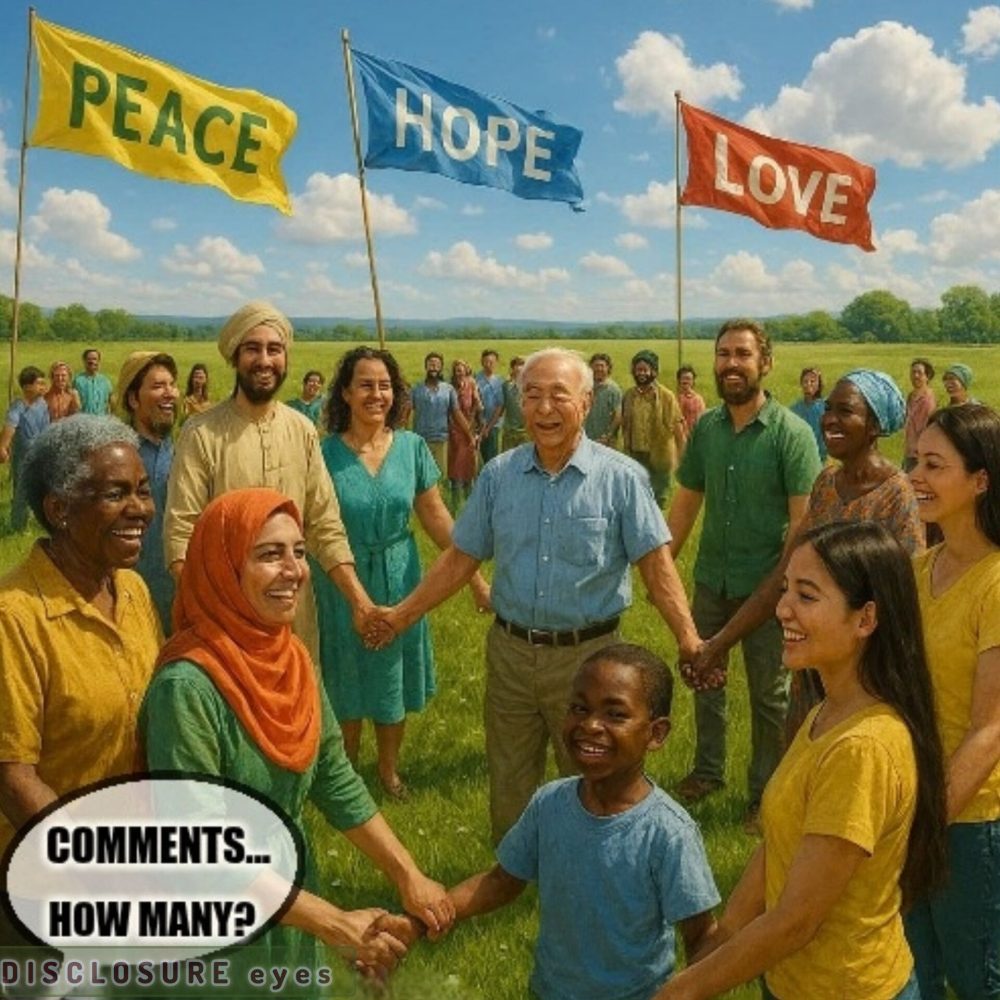
The culmination of this profound transformation is envisioned as a delightful global celebration, marking the definitive end of World War III. Historically, significant peace treaties and the cessation of major conflicts have been commemorated with widespread celebrations, such as Armistice Day marking the end of World War I and various observances for the end of World War II. These events often involve moments of silence for reflection, followed by expressions of joy and unity. Such historical precedents provide a powerful template for envisioning a global celebration that transcends national boundaries and embraces a shared human triumph.
The United Nations, founded with the “overriding mission of saving succeeding generations from the scourge of war,” serves as a testament to humanity’s appreciation for international solidarity and shared humanity. Events like the “Global Unity Dinner” aim to encourage unity, peace, and understanding across different nations and communities, creating platforms for dialogue and celebrating diversity through music and dance. Transformational festivals also demonstrate how communities gather for “heart-opening connection, personal expansion and play,” fostering unity and transformation. These contemporary examples illustrate existing human capacities for collective joy and spiritual alignment, which can be amplified on a global scale. This celebration is not merely an end to conflict but a joyous affirmation of an “evolved human and planetary society” that has embraced its shared humanity and transcended its past divisions. It is a collective recognition of the “simple truth” that has led to everlasting peace and spiritual fulfillment. The “delightful celebration” is not just a symbolic event, but the
experiential manifestation of the collective achievement of everlasting life on Earth. It signifies the transcendence of the “fear of death and the unknown” through the realization of a perpetually flourishing, unified existence, where the “purpose of creation” has been collectively fulfilled. The celebration is the
proof that the interpretive event catalyst and critical mass awakening have succeeded. It is the moment where the “concealment, shame, and contempt” have been definitively overcome, and the “simple truth” of unity and love is universally acknowledged and celebrated as the foundation of a new global reality. It represents a collective “Moksha” or “eternal communion with God” manifested on Earth.
Table 5: Envisioning the Celebration: Markers of Global Peace and Unity
This table provides a conceptual framework for the “delightful celebration,” drawing parallels with historical peace commemorations and integrating the report’s themes of unity, transcendence, and the manifestation of the “simple truth.” It serves as a powerful concluding statement, demonstrating the ultimate positive outcome of the proposed framework.
| Dimension of Celebration | Description | Manifestation |
| Historical Precedent & Global Recognition | Drawing inspiration from Armistice Day (WWI end) and UN Day (post-WWII peace mission), signifying collective relief and commitment to peace. | Global holidays, synchronized moments of silence, public gatherings in major cities worldwide. |
| Spiritual & Conscious Unity | Reflecting the critical mass awakening to interconnectedness, transcendence of separateness, and the “simple truth.” | Communal gatherings focused on shared purpose, expressions of gratitude, collective meditation/reflection, acknowledgment of the “Light within.” |
| Cultural & Human Flourishing | Celebrating the evolved human and planetary society, embracing diversity, and the end of “Control Dramas.” | Festivals of unity, diverse cultural performances (music, dance), shared meals, acts of kindness and mutual support, artistic expressions of peace. |
| Wisdom & Ethical Governance | Affirming the role of organizational/practical wisdom in guiding sustainable, ethical societal structures. | Global forums for sharing wisdom and best practices, recognition of transcendent leaders, commitments to “highest good” principles in governance. |
| Rejection of Negative States | Acknowledging the transcendence of concealment, shame, and contempt through forgiveness and transparency. | Public acts of reconciliation, shared narratives of healing, establishment of transparent and forgiving social mechanisms. |
Conclusion: Sustaining the Evolved Society – A Continuous Journey of Light and Wisdom
This report has articulated a comprehensive framework demonstrating how a “simple truth,” drawing upon Kabbalistic principles and the dynamic model of Transformational Leadership, Learning, and Change (T3), can act as an interpretive event catalyst for a critical mass awakening to everlasting life. The analysis has shown how the Kabbalistic understanding of the Infinite Light (Ein Sof) as the singular source of all creation, the purpose of creation to reveal the Divine in the lower worlds, and the concept of the Concealed Light (Or HaGanuz) that must be earned, provide the profound philosophical foundation for this global awakening. Rav Michael Laitman’s vision further amplifies this by transforming Kabbalah into a universal science of human connection and interdependence, destined to burst into collective awareness.
The Transformational Leadership, Learning, and Change (T3) model, progressing from transactional to transformational and ultimately to transcendent leadership, offers the practical means to translate this spiritual truth into collective action and an evolved human and planetary society. Transcendent leadership, with its focus on the “higher good” and societal impact, embodies the ethical application of the simple truth on a global scale. Furthermore, the concept of organizational wisdom, functioning as an adaptive algorithm rooted in ethics and fostering qualities like generativity, emergence, and interdependence, provides the systemic framework for sustainable societal flourishing.
The critical mass awakening, fueled by an interpretive event catalyst, represents the pivotal shift from an era defined by conflict and separateness to one of unity and everlasting life. This awakening is predicated on the collective rejection of concealment, shame, and contempt, which are understood as barriers to the flow of divine light and the manifestation of unity. Strategies for overcoming these negative states, such as self-compassion, forgiveness, and transparency, are crucial components of this collective healing journey. Community-level interventions and collective action, embodying principles like Ubuntu, serve as the tangible manifestations of this awakened consciousness, creating a “dwelling place for the Divine” on Earth.
The report concludes with the vision of a delightful global celebration, marking the definitive end of World War III. This celebration is not merely a symbolic event but the experiential manifestation of humanity’s collective achievement of everlasting life on Earth. It signifies the transcendence of the fear of death and the unknown through the realization of a perpetually flourishing, unified existence, where the purpose of creation has been collectively fulfilled. This vision is not an endpoint, but a joyous marker of humanity’s continuous journey of light, wisdom, and co-creation with the Infinite. The ongoing pursuit of practical wisdom, fostering generativity, interdependence, and self-organization, will ensure the sustained flourishing of this evolved global society, perpetually guided by the simple truth of universal unity and love.
- All rights reserved for the Creator.