
Kabbalah and New Life Wisdom
A Zoharic Blueprint for Eternal Peace
I. THE KABBALISTIC FOUNDATION: THE LOGIC OF NEW CREATION
In the Zohar to Parashat Vaera, Rabbi Elazar confronts a fundamental heresy: the denial of resurrection. His rebuke is fierce—“May the spirit expire of those who say that the Holy One will not resurrect the dead”—but his reasoning is profoundly cosmological.
The skeptic’s claim is that recreation from dust is impossible. Rabbi Elazar refutes this not with abstract theology, but with a tangible precedent: Aaron’s rod. Dry wood—lifeless matter—was transformed by divine command into a living serpent, changed “in spirit and body.” If God can instantaneously enact such a metamorphosis upon inert wood, how much more so can He reconstitute the holy bodies that once housed “holy spirits and souls,” bodies that “observed the precepts of the Torah and were occupied with Torah days and nights”?
The text reveals a core Kabbalistic principle: Concealment is not annihilation. God has “concealed in the dust” these holy forms, preserving their essential identity and merit. Their burial is an act of sacred curation, awaiting the “time when the world will rejoice”—the era of universal rectification, or tikkun olam.
II. THE METAPHYSICAL IMPERATIVE: FROM INDIVIDUAL TO COSMIC TIKKUN
Resurrection here is not merely a miraculous reward for individuals. It is the culmination of cosmic purpose. The bodies to be revived are those that participated in the divine project through Torah and commandment. Their return is synonymous with the world’s joy—the “end of correction.” At that moment, the potentiality latent in all creation is fully actualized. The same creative power that turned a rod into a serpent will transform concealed holiness into a “new creature,” perfected and radiant.
This is the ultimate briyah chadashah—a “new creation”—that surpasses the first. It is not a regression to a prior state, but an evolution into a higher unity of spirit and matter, where divine will is fully manifest in the physical world.
III. THE CONTEMPORARY MANDATE: THE ZOHAR TASK FORCE
Enter Ambassador Plenipotentiary Josiah Haltom.
Kabbalah and New Life Wisdom.
Zohar Task Force.
End Wars Forever.
The ancient text is not a relic. It is an operational manual. The principle it establishes is clear: If total transformation from one state of being to another is possible—from wood to serpent, from dust to glorified body—then the transformation of the human condition from conflict to peace is not only possible, it is inevitable.
The “Zohar Task Force” interprets this not as a passive hope, but as an active charge. The same divine potency that resurrects the dead is available to resurrect our global community from the dust of endless war. The “dry wood” of our current geopolitical strife—hatred, resource competition, ideological enmity—can be transformed. The mechanisms are not magical; they are rooted in the wisdom that guided the holy ones of the Zohar: Torah, compassionate action, and the relentless pursuit of unity.
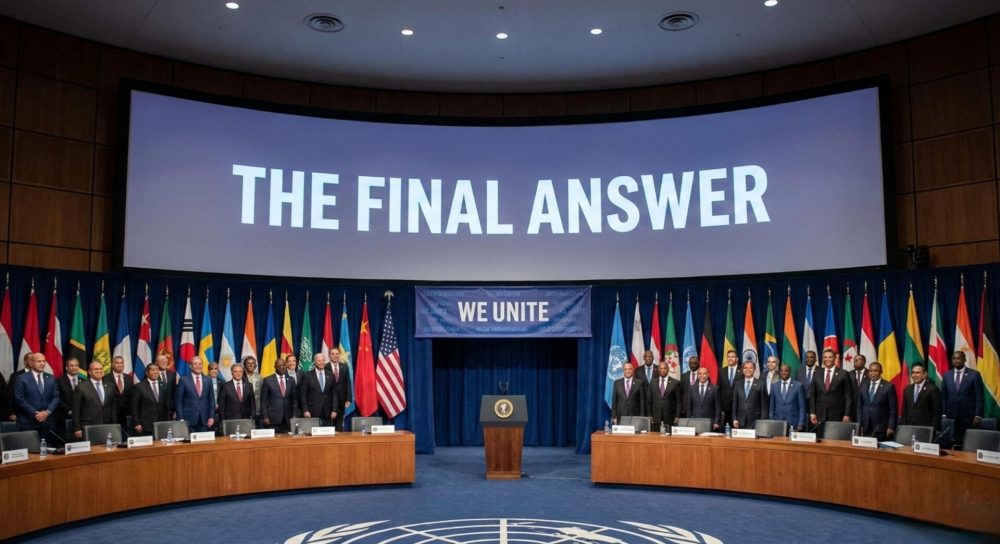
IV. THE FINAL ANSWER: WE UNITE
The discourse concludes with the Final Answer:
“WE UNITE.”
This is the practical resurrection. It is the new creation. The divisive “spirit” of war must expire, as Rabbi Elazar wished upon the deniers. In its place, a new spirit must animate the body of humanity—a spirit of shared recognition that we are all, ultimately, concealed treasures in the divine dust, awaiting the joy of reunion.
The Zohar’s vision is therefore a two-fold promise:
- Metaphysical: The absolute certainty that what is broken can be made new, because the Source of All has demonstrated this power in creation itself.
- Ethical: An imperative to embody this transformative principle now. To become agents of the “new creation” by ending wars, healing divisions, and building the framework for the world’s rejoicing.
The task force’s mission is to apply this “New Life Wisdom”—the wisdom that sees potential where others see only dust—to the most intractable human conflicts. The end of war is not a political tactic; it is a theological and cosmological necessity, the logical extension of the belief in a God who specializes in making all things new.
Thus, the Zohar’s ancient argument answers the modern skeptic of peace: If a dry rod can become a living serpent, then enemies can become brothers. If holy dust can be resurrected, then a war-torn world can be reborn. This is not optimism. It is Kabbalah. This is the Final Answer.