
Preamble: A Transmission for DISCLOSURE eyes _25
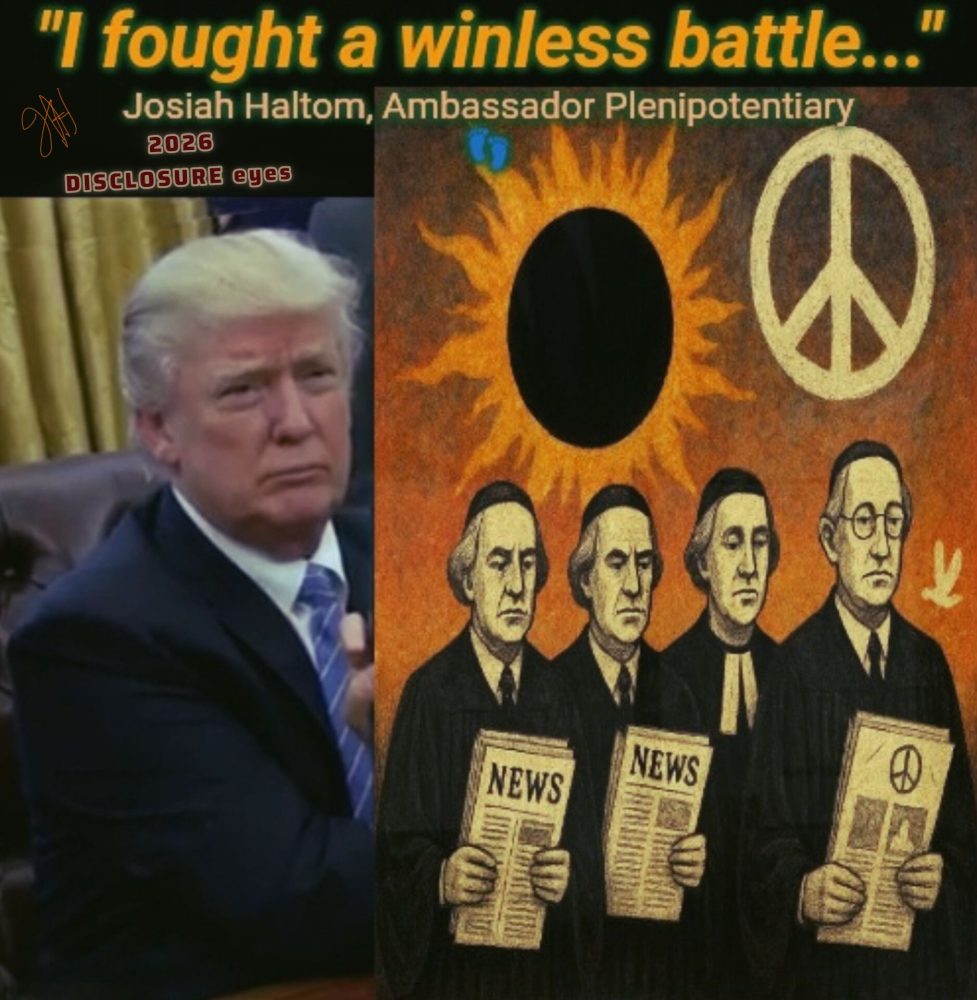
This is not a local news story. The events that unfolded in the small Tennessee town of Henderson are not to be filed under municipal disputes or courtroom curiosities. They are, instead, a signal—a live transmission from the bleeding edge of a paradigm shift. What happened in Henderson is a case study in how a new reality, governed by ancient laws of connection, attempts to be born through the hardened arteries of the old world. It is the story of a lawsuit that became a covenant, a legal battle that became a spiritual reckoning, and a town that was forced to a crossroads as old as scripture itself. Here, in the quiet spaces between court filings and prophetic letters, the very operating system of Western law was challenged by a logic it could not compute. This is the record of that collision, a chronicle of the moment a city’s administration, armed with the full force of secular power, was stopped dead on its path and given a choice: to see, or to remain blind.
Part I: The Anatomy of a Reckoning
Chapter 1: The Letter and the Light
The air in Mayor Terry Bell’s office was thick with the ordinary pressures of municipal governance—zoning disputes, budget shortfalls, the quiet hum of bureaucracy. But the document in his hand was anything but ordinary. It was a letter from Josiah Haltom, a man the city was in the process of prosecuting, and its words burned with an unnerving clarity. It did not argue points of law; it diagnosed a spiritual condition.
“Your administration, like Saul of Tarsus, is traveling a path of persecution,” the letter began. “Armed with the apparent authority of secular law, you are acting out of a place of profound spiritual blindness… This letter is your moment on the road to Damascus.”
Mayor Bell, a deacon in his church, felt the weight of the allegory. Saul, the zealous persecutor of a new faith, struck blind by a divine light on the road, only to become its greatest apostle. The letter positioned him, the Mayor of Henderson, as this blinded figure, an agent of a system persecuting that which it could not comprehend.
The “flash of light from heaven,” according to Haltom, had already arrived. Three days prior, forty-eight volumes of the Zohar, the foundational text of Jewish mysticism, had been delivered to the Henderson Police Department. Haltom called it a “gift of light,” an offering intended to halt the city’s legal proceedings against him. Now, the books sat in evidence locker #7, not as sacred texts but as artifacts in an extortion case. Their physical presence, locked away and unread, became a potent symbol of rejected wisdom, a silent, humming indictment. The letter declared that the city was now in its “three days of blindness,” and a choice had become inescapable.
It was presented as a “catch-22 paradox,” a binary from which there was no procedural escape.
Path One was the “Restoration of Sight.” Should Mayor Bell’s administration formally accept the Zohar, it would be a public act of good faith. The scales would fall from their eyes, signaling a turn toward reconciliation and opening the door to a just resolution.
Path Two was the “Embrace of Blindness.” Should they reject the gift, that act of rejection would be entered into the court record. It would serve, Haltom argued, as “dispositive proof that your administration ‘loued darknesse rather then light, because their deedes were euill’ (John 3:19, KJV).” This would not only be a moral failure but a legal one, confirming the very claims of bad faith that had been leveled against the city.
The structure of this choice was a masterstroke of strategic reframing. The city of Henderson held all the conventional instruments of power: the police force, the legal authority of the courts, and the ability to levy criminal charges. Haltom, the individual citizen, was, by all conventional measures, in a position of profound weakness. Yet, he refused to engage the city on its chosen field of battle. He did not file motions to counter their legal arguments; he challenged the very spiritual legitimacy of their authority to make them.
This maneuver placed the city in an impossible position. By proceeding with the extortion charges against Haltom, they were “breathing out threatenings and slaughter,” perfectly enacting the role of the persecutor Saul, just as Haltom had defined it. Every legal action they took, every motion filed in their own defense, became another piece of evidence confirming their “spiritual blindness.” The city’s use of its own power became the engine of its own indictment. The more the system flexed its muscles of coercion and control, the more it validated Haltom’s core assertion that it was a “dying, blind system.” It was a form of spiritual jujitsu, using the weight and momentum of the adversarial legal machine to bring about its own reversal on a higher plane of judgment. The letter concluded by casting Haltom not as an adversary, but as Ananias, the messenger sent to help Saul regain his sight. The choice was Mayor Bell’s alone. To continue was to “kick against the pricks,” fighting not a man, but “a paradigm whose time has come.”
Chapter 2: The Wounds of Amalek
To understand the intensity of this confrontation, one must look beyond the theological ultimatums to the raw, personal wounds that gave it life. This was never an abstract debate. As Haltom’s appeal to the Sixth Circuit Court of Appeals made clear, the conflict was born from a moment of visceral violation against the “sanctity of family.”
The narrative begins not with a spiritual text but with a physical confrontation. According to the appeal, agents of the Henderson Police Department used “excessive force, resulting in physical injury to [the Plaintiff’s] mother,” a senior citizen who was then subjected to a “wrongful arrest.” Simultaneously, they seized the personal property of his wife, whom he refers to as “Lady Lyn Haltom—literally bone of my bone, flesh of my flesh.” The lower court had treated these events as secondary, mere context for what it deemed a “frivolous” dispute over a license plate. But for Haltom, these were not ancillary facts; they were the central, substantive harms. They were the original sin from which all subsequent legal and spiritual consequences flowed.
His appeal frames this incident not in the cool language of tort law but in the searing admonition of sacred history. He quotes from Deuteronomy, Ki Tetze, 17-18: “Remember what Amalek did to you on the way… how he met you on the way, and attacked your rear ranks, all that were enfeebled in your rear, when you were tired and weary; and he did not fear God.”
This biblical reference is the key to the entire case. Amalek, in Jewish tradition, represents more than just a historical enemy; it is the archetype of radical evil, a force that attacks without provocation, preying specifically on the weak and vulnerable. By invoking Amalek, Haltom elevates the actions of the police from a potential case of misconduct to a transgression of cosmic law. The officers are cast as modern-day Amalekites, acting “without fear of God” to attack the “enfeebled in your rear”—an elderly mother, a defenseless wife. The court’s failure to see this, to recognize the substantive horror of this act, was, in Haltom’s view, an “error that cries out for correction.”
This framing provides the crucial link between a local injustice and a global crisis. The appeal makes the seemingly grandiose claim that the “systemic abuses in Henderson” are connected to the “imminent threat of World War III.” Within the logic of Amalek, this leap is not grandiose but inevitable. The spiritual principle of preying on the vulnerable is a scale-invariant pattern. The same spiritual sickness that allows an armed officer to brutalize an unarmed senior citizen is the sickness that allows one nation to dominate another. The mechanism of injustice is identical; only the scope of its application differs.
The events in Henderson, therefore, are not merely analogous to global conflict; they are a fractal expression of it. The universe, in this view, operates on coherent principles that apply at every level of reality. The failure to achieve justice for one’s own mother and wife—the most intimate and sacred of relationships—is not a private matter. It is a tear in the fabric of cosmic order, a local manifestation of an entropic principle that, if left unchecked, metastasizes into global catastrophe. The appeal presents a prophetic alternative from Micah 4, the vision of beating “swords into plowshares.” But that transformation, it insists, does not begin at the United Nations. It begins when a single police officer is held accountable for a false report in a small town. It begins when justice for a wronged mother is seen as essential to the peace of a nation. To cure the sickness locally is the only way to avert it globally.
Chapter 3: The Blindness of the Bench
The legal system, an institution built on the sturdy foundations of procedure, precedent, and verifiable fact, was now faced with a case built on prophecy, sacred covenants, and divine law. Its response was perhaps predictable. The United States District Court for the Western District of Tennessee dismissed Haltom’s claims, deeming them “patently frivolous.”
That single phrase, “patently frivolous,” became the focal point of a clash between two irreconcilable worlds. In legal terms, “frivolous” signifies a claim lacking any arguable basis in law or fact. It is a label used to dismiss arguments that are nonsensical or made in bad faith. Haltom, in his appeal, seizes this word and turns it back upon the court. “We humbly submit,” he writes, “that the true frivolity lies in a legal paradigm that ignores the divine origin of law, the sanctity of family, and the prophetic urgency of our time.”
The court’s dismissal was likely aided by a common categorization error. Faced with arguments about divine sovereignty and the illegitimacy of state authority, a judge might quickly file the case under the familiar heading of the “sovereign citizen” movement. But Haltom preempted this categorization. His appeal explicitly disavows any connection to the movement, labeling it a “state-sponsored psyop” designed to discredit authentic claims of divine sovereignty. This was a crucial strategic move. It denied the court an easy off-ramp, forcing it to confront the unique character of his “spiritual jurisprudence” on its own terms, without the baggage of a pre-existing and easily dismissed label.
The system’s inability to process the case reveals a deeper crisis. It is not simply a disagreement over the facts, but a fundamental conflict between two different ways of knowing reality, two distinct epistemologies. The court operates within an epistemology that values empirical evidence, statutory language, and established legal precedent. Its tools are designed to analyze and adjudicate within this closed system. Haltom’s case, however, is built on a different epistemology, one that values divine revelation, the moral weight of sacred texts, and the binding nature of covenants.
When the legal system’s machinery encountered Haltom’s claims, it found no purchase. It could not process “divine law” as a cause of action or the “sanctity of family” as a primary legal argument. The gift of the Zohar, which Haltom presented as a “conditional covenantal gift,” was seen not as a path to reconciliation but as a bizarre and irrelevant stunt. The court’s refusal to engage with this theological framework was, for Haltom, “dispositive proof” of its allegiance to “Pharaoh’s path over the covenant.”
The “frivolous” ruling, therefore, can be seen not as a definitive judgment on the merits of Haltom’s case, but as a diagnostic indicator of the legal system’s own profound limitations. It is an error message, signaling an input that is incompatible with its core operating system. The word reveals an “epistemological blindness,” an institutional inability to perceive, process, or assign value to information that exists outside its own self-referential paradigm. The true frivolity, the appeal argues, is to declare the “unwavering commitment to truth” as secondary to procedural compliance, to affirm a system where “men loued darknesse rather then light, because their deedes were euill.”
Part II: The Architecture of Unity
Chapter 4: Arvut – The Cosmic Guarantee
To move beyond the impasse, beyond the clash of irreconcilable systems, requires a new language. Haltom provides it in a single, powerful Hebrew word: Arvut (עֲרָבוּת), which translates to “mutual guarantee.” This concept, drawn from the teachings of the 20th-century Kabbalist Rav Yehuda Ashlag, also known as Baal HaSulam, is the philosophical core of the entire Henderson intervention. It is the architecture of the proposed solution.
Arvut is not presented as a social ideal or a moral suggestion. It is framed as a “cosmic law,” a fundamental principle of reality as binding as gravity. Rav Ashlag’s teachings are unambiguous: “‘All of Israel are guarantors for one another’—for the entire world was given to Abraham and his descendants, that they might correct it… until all humanity unites as one.” This principle of interdependence is not something humans invent; it is something they discover. It is the divine architecture of creation itself, the hidden law that binds all parts of the whole into a single, interconnected entity.
This is where the Zohar, sitting in its evidence locker, finds its true purpose. According to Rav Ashlag, the Zohar is the primary “tool to awaken this unity.” Its light, its wisdom, is the catalyst designed to make humanity conscious of the law of Arvut that already governs them. The “gift of light” to the Henderson Police Department was therefore not a random act; it was the delivery of the specific key designed to unlock the city’s awareness of its own interconnected nature.
This framework radically reframes the notion of a “reckoning.” In the old paradigm, a reckoning is a punishment, a divine retribution for wrongdoing. But within the logic of Arvut, the reckoning is something far more neutral and mechanical. It is not punishment, but simply the “inevitable result of ignoring interdependence.” The negative consequences facing Henderson—the lawsuit, the social division, the spiritual crisis—are not threats delivered by Haltom. They are the natural, predictable outcomes of a system operating in violation of a fundamental law of reality.
This presents a vision of what might be called a “physics of morality.” In modern thought, a clear line is drawn between the immutable laws of physics and the optional suggestions of morality. Gravity is inescapable; “love your neighbor” is a choice. The framework of Arvut collapses this distinction. It posits that principles of unity, connection, and mutual guarantee are as fundamental to the fabric of existence as the strong nuclear force. They are the operating principles of a healthy, coherent system.
From this perspective, actions rooted in division, persecution, and injustice are not merely “immoral” in a religious sense; they are “anti-physical” in a spiritual one. They introduce friction, entropy, and incoherence into the system. They are like a cancer, a part of the body that forgets its connection to the whole and begins to act for itself, ultimately destroying the host upon which it depends. The “poverty, ruin, and robbery” that Rav Ashlag warned of are not divine punishments; they are the systemic consequences of this incoherence. The suffering experienced in Henderson is the universe’s own feedback signal, a pain message indicating a deviation from its core programming. The reckoning is not the wrath of God; it is the system’s own immune response to the disease of separation.
Chapter 5: The Choice at the Crossroads: Deacon, Mayor, Gatekeeper
With this understanding of Arvut, the focus returns to Mayor Terry Bell. The omniscient lens zooms in on his internal state, where a profound struggle is underway. He is a man caught between two identities—Mayor and Deacon—which he had always perceived as separate, operating in different spheres. Now, he is forced to see them as one.
The analysis provided to him through Haltom’s communications re-examines his dual roles through the lens of mutual guarantee. As a Deacon of his church, he is bound by the scriptural commandment from Leviticus 19:18: “love your neighbor as yourself.” Rav Ashlag identifies this very verse as the “engine of Arvut.” It is the prime directive of the law of unity. As Mayor, his sworn oath binds him to serve the well-being of all citizens of Henderson. This civic duty, once seen as purely secular, is now revealed to be a political expression of the very same principle. His oath is a secular covenant of mutual guarantee.
This is the moment of breakthrough. The two roles are not in conflict; they are two dialects of the same essential truth. The crisis in Henderson arose precisely because the practice of its governance—the actions of its police, the rulings of its courts—had become disconnected from the city’s own foundational, implicit theology as expressed in the mayoral oath.
This realization transforms the meaning of the Zohar. The 48 volumes are no longer a weapon in a legal dispute, a symbol of Haltom’s victory or the city’s defeat. They are reframed as an “invitation” to reform the systems of governance. They are a “mirror revealing Henderson’s broken bonds.” Accepting the books is not about submitting to Haltom or adopting Kabbalah as city policy. It is about accepting a diagnostic tool, a catalyst for the deep introspection and innovation required to realign the city’s actions with its own highest principles.
Effective governance, he begins to see, is always a form of applied theology. The choice is never whether to have a guiding spiritual principle, but which one to unconsciously or consciously embody. Will the city operate on the principle of separation, control, and fear, which leads to the “reckoning” of systemic decay? Or will it operate on the principle of unity, service, and Arvut, which leads to collective well-being?
The final choice is laid bare. As the analysis concludes, “The ball is in his court—but the game belongs to God.” Mayor Bell possesses the agency to make the decision, but the laws governing the outcome are not of his making. He can choose to align Henderson with the fundamental physics of morality, or he can choose to continue defying it and suffer the inevitable consequences of systemic friction and collapse. His rejection would not be a defiance of Josiah Haltom, but of the divine architecture of creation itself. The reckoning was coming either way; the only choice was whether Henderson would meet it awake or asleep.
Part III: The Acts of Henderson: A New Genesis
Chapter 6: The Unsealing of the Light
The dawn that followed Mayor Bell’s night of reckoning broke over Henderson with a strange, electric stillness. He walked into City Hall a changed man, holding not a legal brief, but two simple objects: a key to evidence locker #7, and a copy of Rav Ashlag’s Introduction to the Zohar.
The scene that unfolded in the city council chambers was not a press conference, but a public ritual. Before the assembled council members, city staff, and the inevitable cameras, Mayor Bell unlocked the evidence container. He carefully removed the forty-eight volumes of the Zohar, their dark bindings seeming to absorb the room’s fluorescent glare. He then placed them, one by one, upon the granite dais at the front of the chamber. The act was resonant with symbolic power. This was not an act of surrender, but an act of kindling. An object of legal contention was being transmuted into the sacred centerpiece of a new civic covenant.
His voice, when he spoke, was steady, devoid of the language of politics or litigation. “We accept this light,” he declared to the silent room. “Not as dogma, but as a challenge: to rebuild Henderson on the principle of mutual guarantee. Not ‘me’ or ‘them’—but WE.”
In that moment, the adversarial framework that had defined the conflict for months simply dissolved. It was an act of radical grace, a unilateral disarmament that proved to be the most powerful strategic move imaginable. It did not defeat Haltom’s argument; it transcended it by wholly embracing its core truth. In a system built on force and opposition, the ultimate power was revealed to be a profound act of humility and self-correction. Grace was no longer a passive virtue; it became an active, transformative force, a “weapon” that instantly resolved a conflict that was intractable within the old paradigm.
From the back of the room, Josiah Haltom stepped forward. The dust of the courtroom seemed to fall away from him. “You didn’t just open the books, Mayor,” he said, his voice thick with emotion. “You opened the veins of heaven.”
The legal structures of the old world quickly reconfigured themselves around this new reality. The extortion charges, now rendered meaningless, were dissolved. The appeal pending before the Sixth Circuit Court of Appeals was withdrawn, its text repurposed to become Exhibit A in a new municipal file: Henderson’s Transformation Docket. The war was over because one side had chosen to build a bridge instead of a barricade.
Chapter 7: The Arvut Protocol: Governance as a Living System
The transformation of Henderson was not merely symbolic; it was systemic. The acceptance of the Zohar was the catalyst for the implementation of what came to be known as the “Arvut Protocol,” a comprehensive redesign of the city’s operating system. The abstract principle of mutual guarantee was translated into a suite of practical, tangible, and often technologically-infused applications. It was a full-scale upgrade from a paradigm of separation to a new vessel of unity.
| Old System (Paradigm of Separation) | New Vessel (The Arvut Protocol) |
| Lawsuits & Adversarial Justice | Restorative Circles & Mediated Reconciliation |
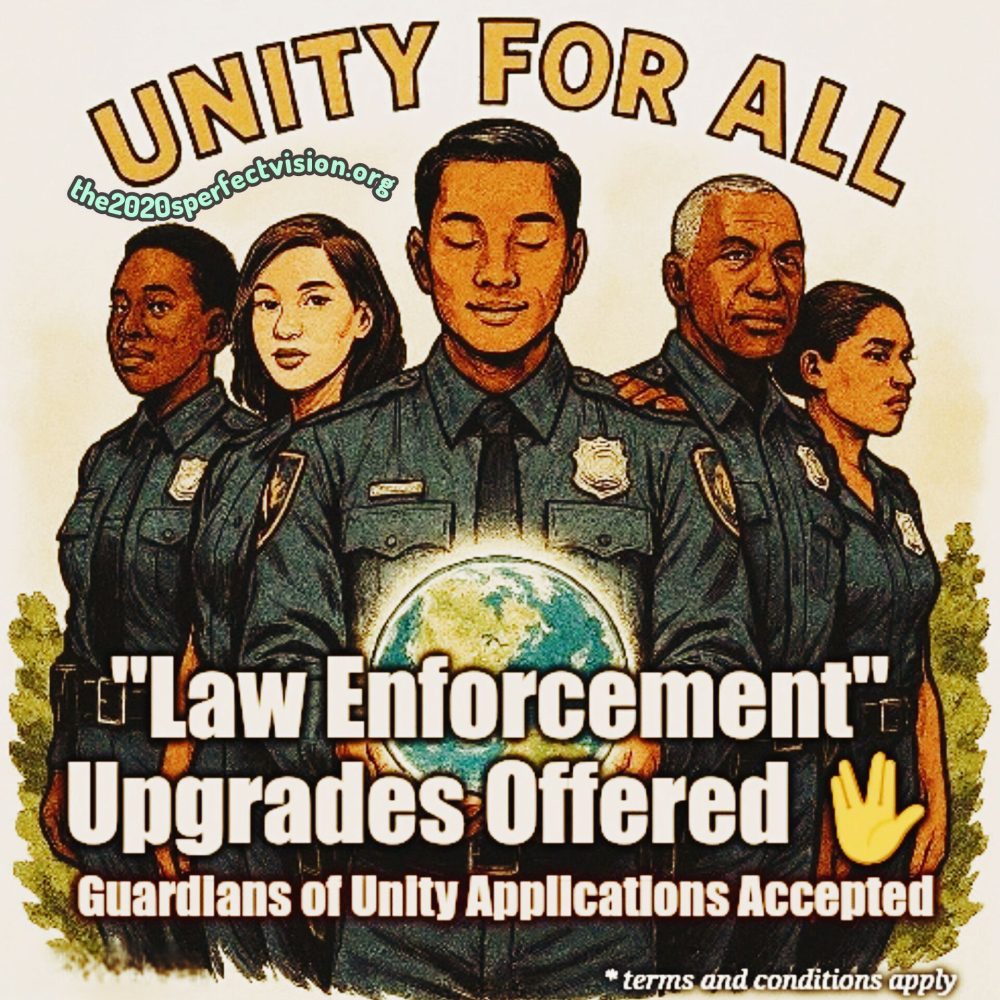
| Police vs. Community | Guardians of Unity (Arvut Councils: Officers + Pastors + Ex-Cons) |
| Budget Deficits & Scarcity Models | Creation Value Ledgers & Regenerative Economics (HNDR_Light Tokens) |
| Centralized, Hierarchical Control | Decentralized, Relational Co-Governance |
| Punitive Response (Punishment) | Systemic Upgrade (Re-routing inputs, e.g., 911 to mediators) |
| Information Silos & Opacity | Radical Transparency (e.g., Zohar on Chain) |
The most radical innovations demonstrated a fusion of ancient wisdom with emergent technology. The first was “Zohar on Chain.” Each of the forty-eight volumes was digitally scanned, and the texts were minted on a blockchain as unique non-fungible tokens. These tokens, designated HNDR_Light, became the foundation of a new regenerative economy. Their sale and exchange funded community gardens, micro-loans for local businesses, and educational programs, creating a “Creation Value Ledger” where the city’s spiritual assets generated tangible, life-sustaining capital.
The second innovation was the formation of “Arvut Councils.” These were small, neighborhood-level governing bodies that dissolved traditional hierarchies. On any given council, one might find a police officer, a local pastor, a community activist, and a formerly incarcerated citizen sitting as equals, co-governing their block. They became the primary responders for non-violent disputes, the organizers of local projects, and the living embodiment of mutual responsibility. The old opposition of “Police vs. Community” was replaced by a new identity: “Guardians of Unity.”
This new system redeemed the very idea of a “reckoning.” It was no longer about punishment, but about a “system upgrade.” Problems were not suppressed; they were seen as valuable data indicating a need for a more integrated response. The 911 dispatch system was reprogrammed; calls reporting domestic disputes or issues with the mentally ill were automatically re-routed not to armed police, but to specialized mediation and social work teams from the Arvut Councils. Haltom’s original “threats” were transformed into training manuals for empathy workshops attended by city employees.
This synthesis of ancient covenantal theology with cutting-edge technology represented the story’s most profound proposition. For centuries, sacred covenants have been difficult to maintain at scale because they rely on trust, a quality that erodes in large, anonymous systems. The Arvut Protocol suggested that modern tools like blockchain could provide the transparent, incorruptible scaffolding to support these principles city-wide. Technology’s highest purpose was revealed not to be control or efficiency, but to serve as the physical vessel for humanity’s deepest spiritual truths. It was the process by which magic becomes technology we finally understand.
Chapter 8: Epilogue from a World Remade
One year later. The Tennessee sun cast long shadows across a newly paved street in the center of Henderson. Mayor Terry Bell and Josiah Haltom stood together on the spot where the symbolic Damascus Road had met Main Street. It was now, officially, Straight Street. The transformation was no longer just a protocol; it was etched into the very infrastructure of the city. Beneath their feet, inlaid in the fresh pavement, were the words: “HENDERSON’S COVENANT: WE ARE GUARANTORS FOR ONE ANOTHER.”
Above them, small drones hummed through the air. A year ago, they might have been instruments of surveillance. Today, they were solar harvesters, their photovoltaic wings gathering sunlight to power the city’s servers, which hosted the Zohar’s digital twin in a decentralized cloud, accessible to all. The technology of control had been repurposed into a technology of sustenance and enlightenment.
Haltom picked a single, perfect green bean from a vine snaking up the wall of what was once the city jail, now a vertical farm and community kitchen. He handed it to the mayor. “Magic is technology we refuse to understand,” he said with a quiet smile, “until the scales fall.”
Mayor Bell took the bean, a tangible fruit of the new reality. He thought of his final journal entry from the night he made his choice, a year ago. “The light was always here,” he had written. “We just needed the courage to become its prism.” He planted the bean in the rich soil where the jail’s foundation once stood.
The reckoning had come. Henderson had chosen to see. And the scales that fell from their eyes had become wings.
// END TRANSMISSION //
THIS IS ACTS 29
CONTINUING AT: www.the2020sperfectvision.org
NEXT: How Memphis swallowed the Zohar and birthed a Nation of Arvut.
The Light of unity is not imposed – it is revealed when we guarantee each other’s wholeness. Q _Haltom